Fire Cider: A Spicy Herbal Tradition for the Fall & Winter Months

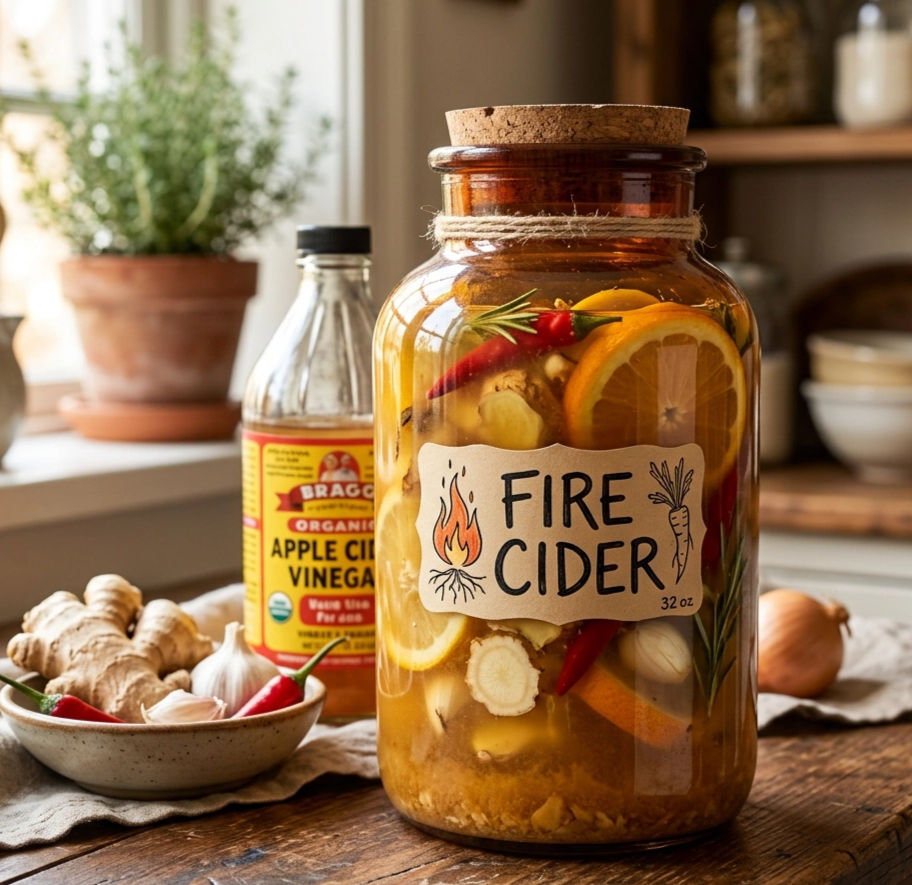
If you've spent any time in the herbal wellness world, you've probably heard someone mention fire cider.
Maybe you've seen a beautiful jar packed with oranges, lemons, garlic, ginger and herbs sitting on someone's counter and wondered...
What exactly is that—and why are people drinking it?!
Fire cider is one of those traditional herbal preparations that looks complicated but is actually incredibly simple to make at home.
And fall is the perfect time to start a batch.
🍎 What Is Fire Cider?
Fire cider is a spicy, tangy herbal vinegar traditionally made by infusing apple cider vinegar with ingredients such as garlic, onion, ginger, horseradish and hot peppers.
There isn't one single "correct" recipe.
That's actually part of what I love about it.
Over time, people have created their own versions using citrus fruits, herbs, spices and whatever ingredients they enjoy or have available.
After everything has had time to infuse, the solids are strained out and the finished vinegar is often sweetened with a little raw honey.
The result?
Tangy. Spicy. Sweet. And definitely capable of waking you up.
🌿 What's Usually in Fire Cider?
A traditional-style batch often starts with:
Apple cider vinegarThis creates the acidic base that extracts components from the herbs, spices and produce while they infuse.
Fresh gingerAdds that unmistakable warming, spicy flavor.
HorseradishOne of the ingredients responsible for the fire in fire cider.
GarlicStrong, savory and commonly used in traditional herbal preparations.
OnionAnother classic ingredient that adds both flavor and plant compounds to the infusion.
Hot peppersJalapeño, cayenne or other hot peppers can be used depending on how brave you're feeling.
CitrusLemon and orange are popular additions that brighten the flavor.
Herbs & spicesRosemary, thyme, turmeric, cinnamon and other herbs can also be added.
And finally...
Raw honeyUsually added after straining to soften the sharp vinegar and heat.
🔥 A Simple Homemade Fire Cider Recipe
You'll need:
1 orange, sliced
1 lemon, sliced
½ medium onion, roughly chopped
6–8 cloves garlic, lightly crushed
3–4 inches fresh ginger, sliced or grated
2–3 inches fresh horseradish root, chopped or grated
1 jalapeño or other hot pepper, sliced
1–2 sprigs fresh rosemary
A few sprigs fresh thyme
1 cinnamon stick
1 teaspoon turmeric OR a few slices fresh turmeric
Raw apple cider vinegar, enough to completely cover everything
Raw honey, to taste after infusing
How to Make It
Add your chopped fruits, vegetables, herbs and spices to a clean glass jar.
You don't need to arrange everything perfectly—although I won't pretend a colorful fire cider jar isn't ridiculously pretty.
Pour apple cider vinegar over everything until all of the ingredients are completely submerged.
This part matters. You don't want pieces of produce sitting above the vinegar.
Cover the jar.
If you're using a metal canning lid, place parchment paper or another food-safe barrier between the vinegar and the metal. Vinegar is acidic and can react with or corrode some metal lids.
Store your jar in a cool, dark place and allow it to infuse for approximately 3–4 weeks.
Give it a gentle shake regularly and make sure everything remains submerged.
🍯 After 3–4 Weeks...
Strain the mixture through a fine-mesh strainer or cheesecloth.
Press the ingredients to extract as much liquid as possible.
Then add raw honey to taste.
Start with a small amount—you can always add more.
Transfer your finished fire cider into a clean glass bottle or jar, label it with the date, and store it in the refrigerator for best quality.
🥄 How Do You Use Fire Cider?
This is where people sometimes get stuck.
You made this giant jar of spicy vinegar...
Now what?
Some people take a small diluted amount, but you absolutely don't have to drink it straight.
Try adding a splash to:
A glass of water
Warm water with honey
Salad dressing
Marinades
Soups or chili
Sauces
Homemade vinaigrettes
I actually love the idea of treating fire cider as both an herbal preparation and a food rather than thinking you have to choke down a shot every morning.
And please don't repeatedly take highly acidic vinegar straight. Diluting it is much kinder to your mouth, throat and tooth enamel.
🌿 Can You Customize It?
Absolutely.
That's one of the best things about making your own.
Don't like extremely spicy foods?
Use less hot pepper.
Love ginger?
Add more.
Have fresh rosemary or thyme growing outside?
Throw some in.
Other additions you could experiment with include:
Sage • oregano • black peppercorns • cloves • star anise • elderberries
However, adding more ingredients doesn't automatically make something "better."
That's something I think gets lost in DIY wellness.
Every ingredient should have a reason for being there—whether that's flavor, traditional use or simply because you enjoy it.
⚠️ A Few Things to Remember
Fire cider is food, but that doesn't mean every ingredient is appropriate for every person.
Apple cider vinegar is highly acidic and can irritate the digestive tract or damage tooth enamel when consumed undiluted.
Herbs and concentrated ingredients may also interact with certain medications or medical conditions.
Honey should never be given to children younger than 12 months.
And despite some of the claims you'll see online, fire cider shouldn't be viewed as a cure or replacement for appropriate medical care.
🌱 The Best Part? Learning to Make It Yourself.
This is exactly the kind of thing I want to share more of through The Nourishing Cottage.
You don't have to buy every natural wellness product already made.
Sometimes you just need someone to show you where to start.
Fire cider is inexpensive, customizable and a great introduction to making herbal preparations at home.
And there's something incredibly satisfying about opening your cabinet in the middle of fall and seeing a jar you made yourself slowly infusing away.
Simple ingredients. A little knowledge. And a willingness to learn.
That's what The Nourishing Cottage is all about. 🌿
This information is provided for educational purposes and is not intended to diagnose, treat, cure or prevent disease. If you take medications, are pregnant or breastfeeding, or have a medical condition, talk with a qualified healthcare professional before using concentrated herbal preparations.


Comments